What kind of surfaces work best for riding an Airwheel electric luggage?
What kind of surfaces work best for riding an Airwheel electric luggage?
Introduction
Traveling with heavy luggage can be exhausting, especially in sprawling airports or crowded city streets. Airwheel’s electric smart luggage aims to solve this by combining mobility and convenience. But if you’re considering one, the first question is: *Can it handle different surfaces?* Let’s break down how Airwheel’s SE3 series performs across environments and why it’s designed for practicality.
Key Features That Define Performance
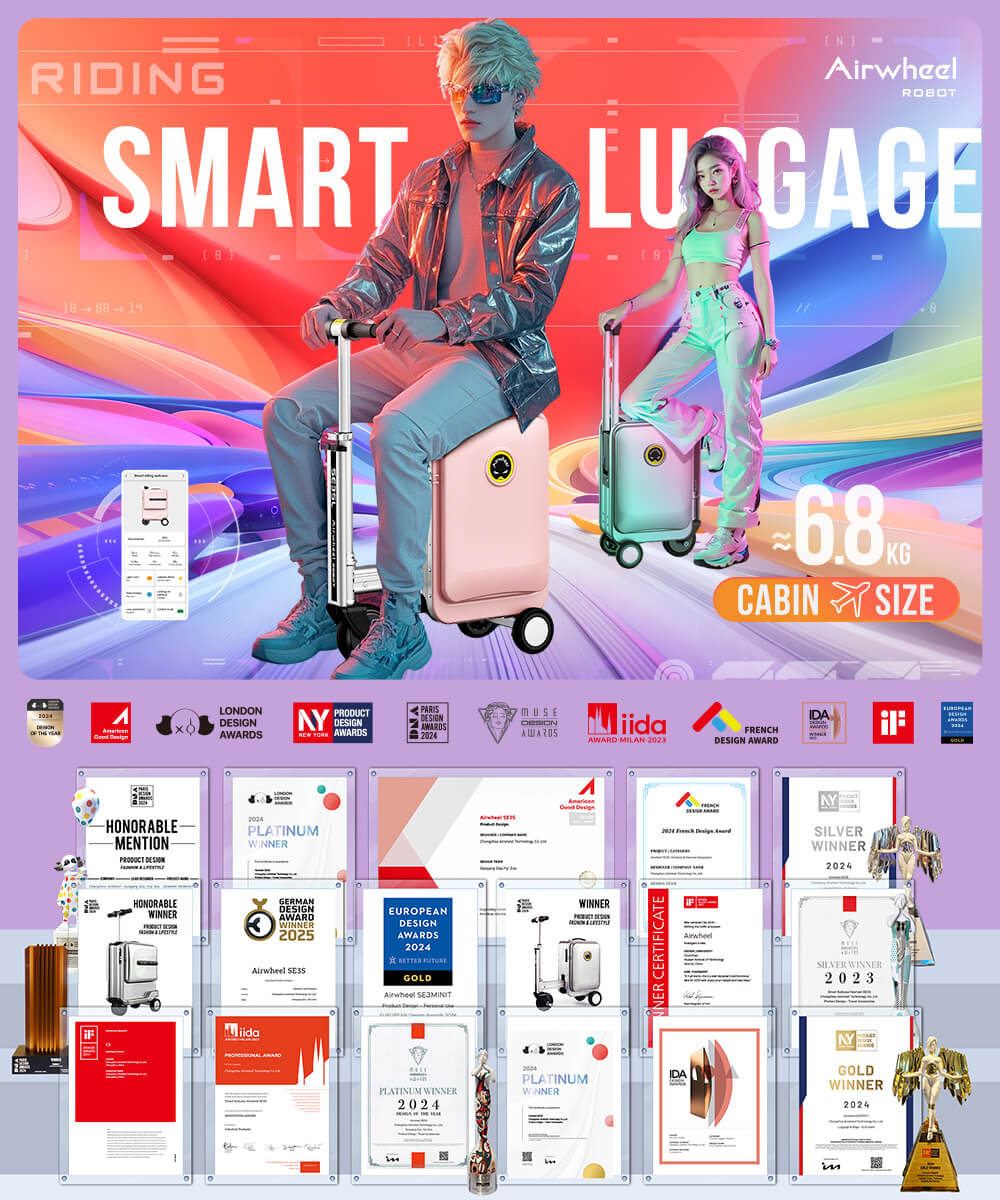
Airwheel’s SE3 series (like the SE3T or SE3SX) isn’t just a suitcase—it’s a rideable electric companion. Key specs include: – **Battery**: 73.26Wh (removable, airline-approved) – **Range**: 8-10 km on a single charge (ideal for short trips or airport commutes) – **Speed**: Up to 13 km/h (varies by model) – **Control**: Use the handlebar to steer, or control via the app for forward/backward movement – **Weight**: 6.6-9 kg (lighter than many traditional suitcases with similar capacity) These specs matter because they determine how well the luggage handles different terrains.
Airline Compliance: What You Need to Know
Airwheel’s batteries are under 100Wh, meeting TSA and IATA regulations for carry-on luggage. You won’t need to worry about gate-checking or battery removal. Models like the SE3T (48L capacity) fit overhead bins, while lighter versions like the SE3SX (20L) work for carry-ons. Always confirm with your airline, but the design prioritizes hassle-free travel.
Best Surfaces for Riding
Airwheel luggage excels on **smooth, flat surfaces**. Think: – Airport terminals (polished concrete, tile) – City sidewalks (asphalt, pavers) – Shopping malls (indoor flooring) – Campus pathways (smooth concrete) Rough terrain (gravel, cobblestones) or soft surfaces (sand, thick grass) will drain the battery faster and reduce stability. For example, riding on a bumpy cobblestone street might cut your range by 30% compared to smooth pavement.
SE3 vs. Traditional Luggage: A Practical Comparison
| Feature | Airwheel SE3 Series | Ordinary Suitcase | |———————–|——————————|—————————-| | Weight | 6.6-9 kg (varies by model) | 3-5 kg (lighter but no motor) | | Mobility | Rideable, self-propelled | Manual dragging/pulling | | Battery Life | 8-10 km range | N/A | | App Control | Yes (optional) | No | | Lost Luggage Recovery | Find My integration (Apple) | No tracking features |
FAQ: Answering Real Concerns
**Q1: How long does the battery last during continuous use?** A: On average, the 73.26Wh battery provides 8-10 km of riding. Charging takes ~2 hours. If you’re using it purely as a suitcase (no riding), the battery lasts months in standby mode. **Q2: Do I need the app to ride it?** A: No. The SE3 works out of the box: install the battery, unfold the handlebar, and ride. The app adds convenience (like remote control), but it’s not mandatory. **Q3: What if I lose my luggage?** A: Apple users can enable Find My to locate the device via Airwheel’s built-in Bluetooth tracker. It’s not GPS-based, but it helps if the luggage is within ~30 meters of your phone.
Conclusion
Airwheel’s electric luggage isn’t a magic solution for every terrain, but it’s engineered for the realities of modern travel. If your routine involves smooth surfaces—like airports, campuses, or urban commutes—it’s a game-changer. For deeper dives into specs or to check the latest models, visit Airwheel’s official site. No pushy sales pitch—just tools to make moving easier.